Taylor Pate
Scavenging. That is my art practice. Nature is my studio.
I seek to document the sites throughout Chicago’s parks and forest preserves as a meditation on my relationship to the land as well as the systems that have led us to the point of our natural world being delegated to these restricted lots.
A lot of my practice is in response to my identity. I’m a Black woman hailing from the South side of Chicago, a product of my grandparents who all migrated from Tennessee to the neighborhood of Washington Heights. I did not come from wealth, but I was fortunate to be born to a family of hard workers.* It’s not a surprise to many when I mention the significance of farming in my family. I often think that the hikes and walks I take are chances for my ancestors to appreciate the land without expectation.
In those moments of exploration, I utilize two forms of documentation: the camera and accession.
Photographing these sites allows for a memorialization of what is––however, I take advantage of framing, lighting, and editing as means of manipulation in order to place emphasis on those moments that are significant to me. Moments of artificial vibrancy. Irregular shadows and highlights. Generally, there is a subtlety in these tweaks I make so there’s less being questioned. But, there is also a desire to create undeniably altered images. These works don’t live separately, rather in the same reality. They reflect both the subtle and the sudden in how our government, on many levels, changes our communities.
Who controls the narrative? What holds precedent in the chaos?
In tandem, I’m guilty of not leaving these places the same as I found them. I take, though, the discarded. Or what is assumed to be. I gravitate towards wood, as the physical depth speaks to the history of years of human impact, in contrast with various kinds of waste of people’s day to day. Though waste is such a broad term––for me, it encapsulates food wrappers, bottle caps, and coffee cup sleeves to the remains of accidents, fires, and broken machines.
Despite the immediate associations that may come to mind when observing these objects, the beauty of them lies in sitting with what I’ve now turned into artifacts and thinking beyond what simply is. I encapsulate these pieces in tar gel, deeming them “worthy” of display. Contrastingly, the texture of the gel is reminiscent of tarps and duct tape––two materials with various heavy connotations, all which deal with the body in some manner.
Who’s body belongs where? Doing what?
*The label of hard worker, especially for Black and Brown people is not something to be praised. We must push ourselves further, faster, in attempts to catch up when we are never meant to reach the podium.
I cannot help but wonder where I would be, if this would be written, if I could just stop working. As our society devolves, there are so many things closing in on us. We have been continuously relegated to these small patches of land, forced to look out and see the world change in ways that we don’t think we’d live to see. I am not afforded the opportunity to stop moving as I race out of these boundaries.
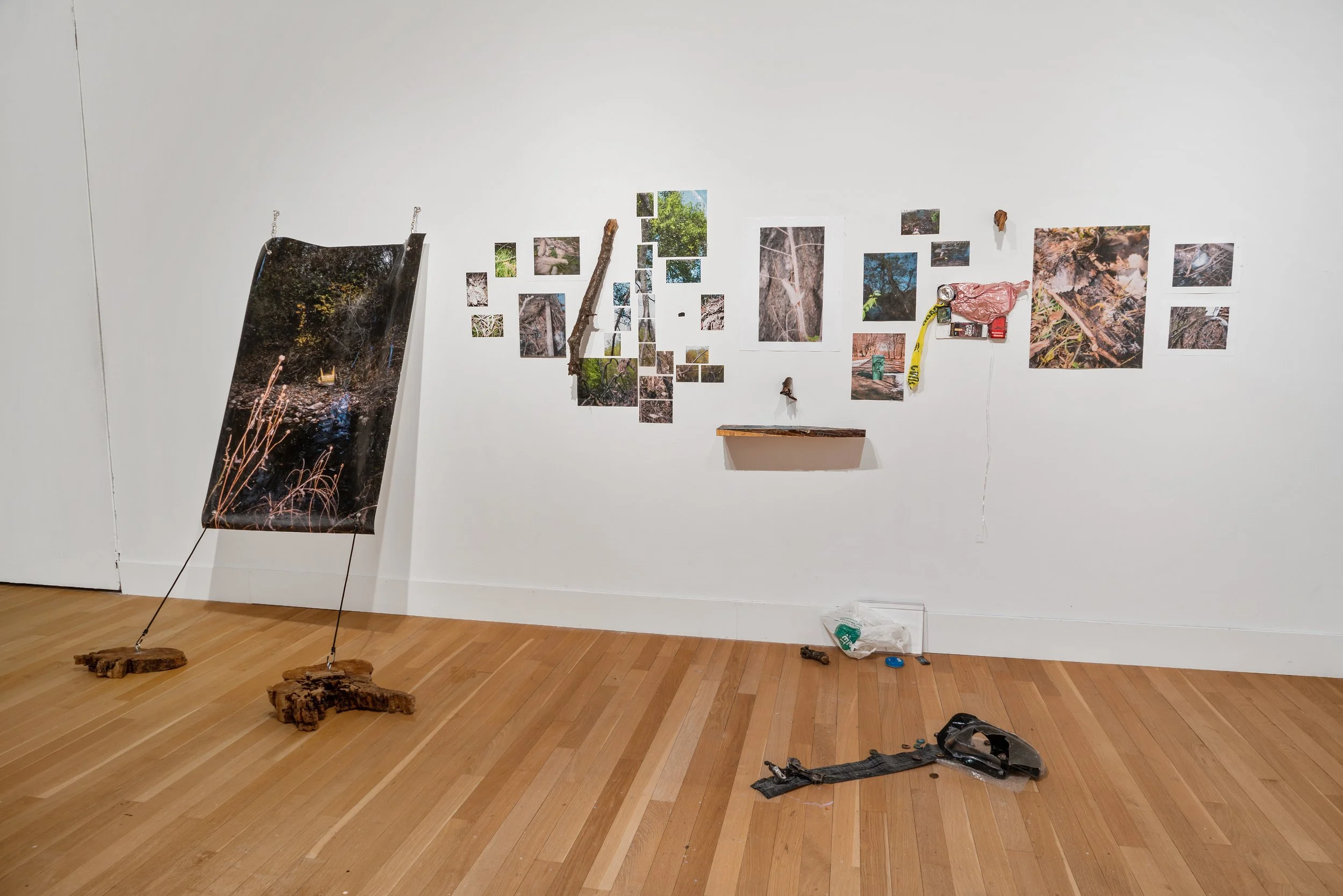
still pouring installation view, 2026. Photo by Bob. (Robert Chase Heishman + Robert Salazar).
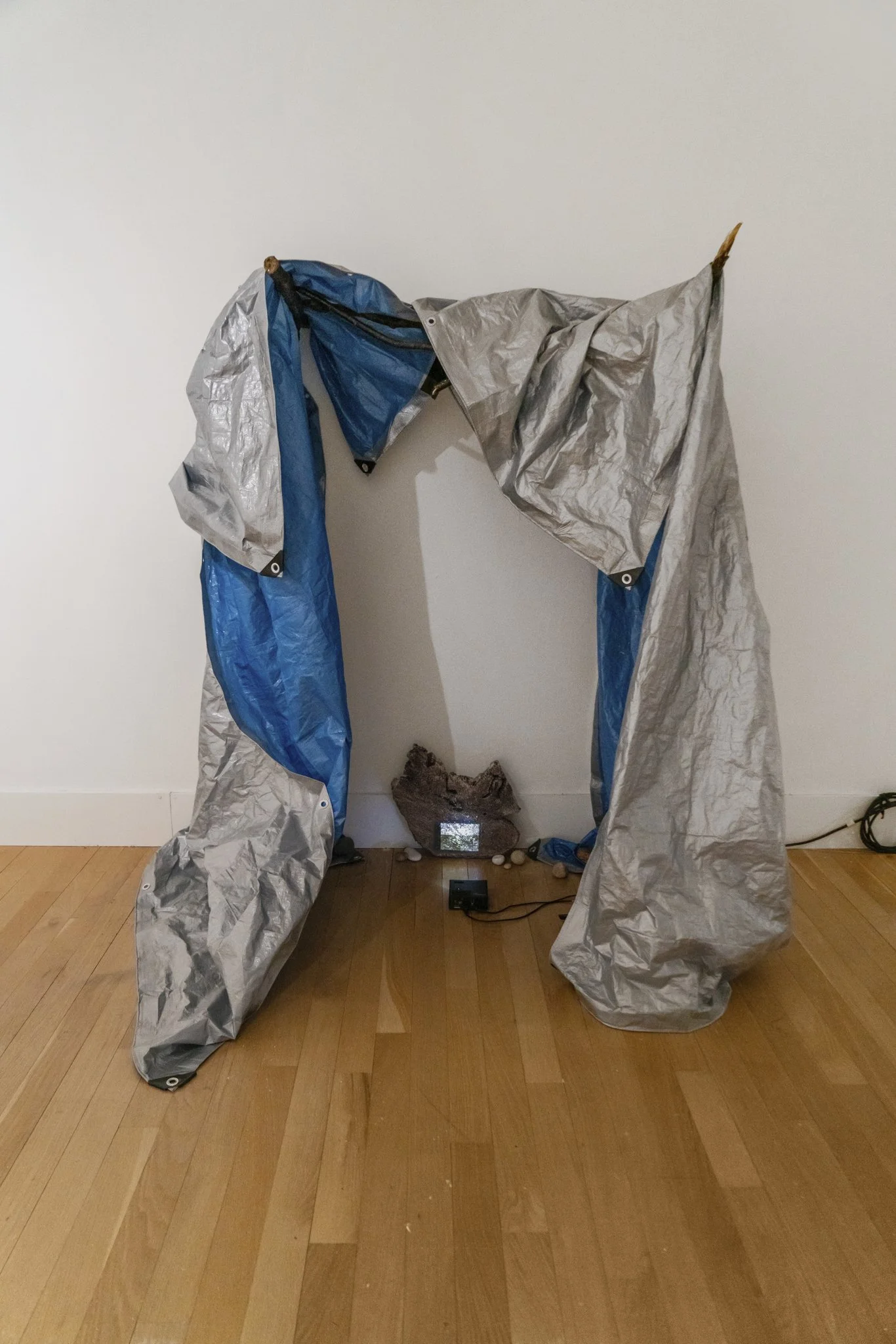
tentative: shelter, 2026. Tarps, duct tape, found branches coated with tar gel, 16mm projection (00:36) onto found wood coated with tar gel, rocks from Pebble Beach. Photo by Bob. (Robert Chase Heishman + Robert Salazar).
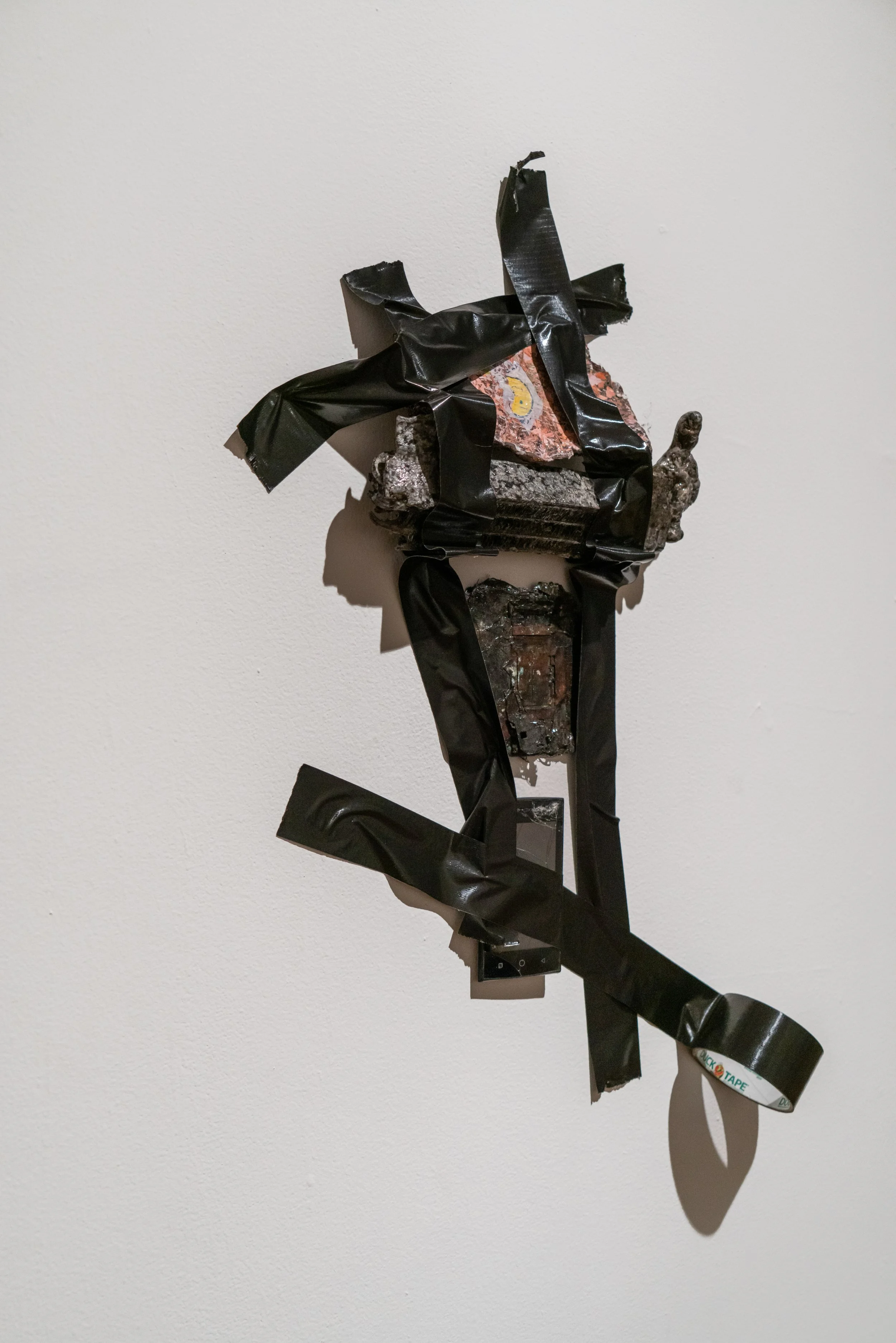
fixation, 2026. Found wood coated with tar gel with printer paper layered, found metal and circuit board from forest fire coated with tar gel; found phone, duct tape. Photo by Bob. (Robert Chase Heishman + Robert Salazar).
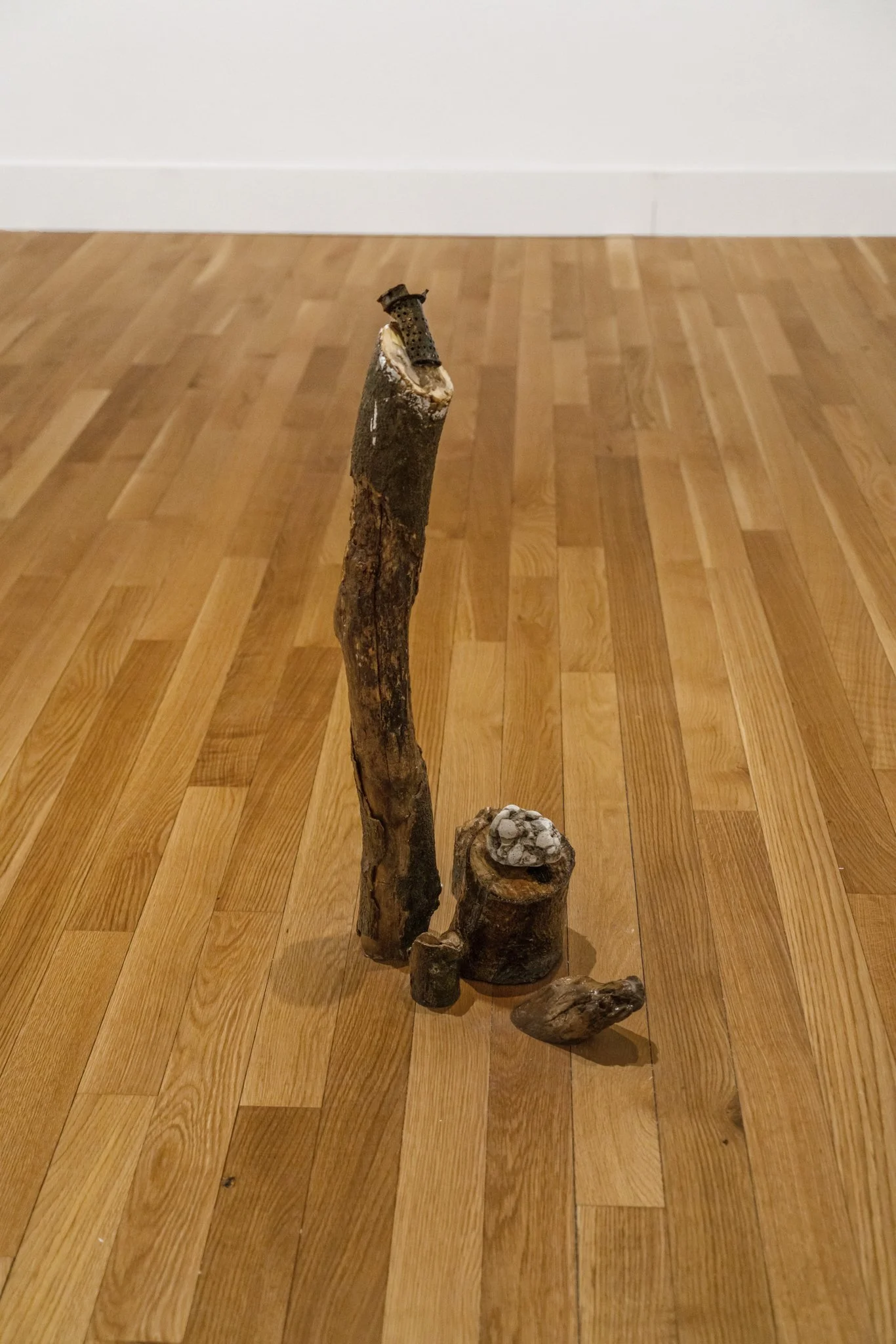
vulnerable, 2026. Found branches coated with tar gel, rock, inkjet photo coated with tar gel. Photo by Bob. (Robert Chase Heishman + Robert Salazar).